Journal
How Much Does a Water Well Cost? A £560 Price Explained
How much does a water well cost? A family hand-pump well in Uganda costs £560. See what each part pays for, why depth matters and what proof you receive.
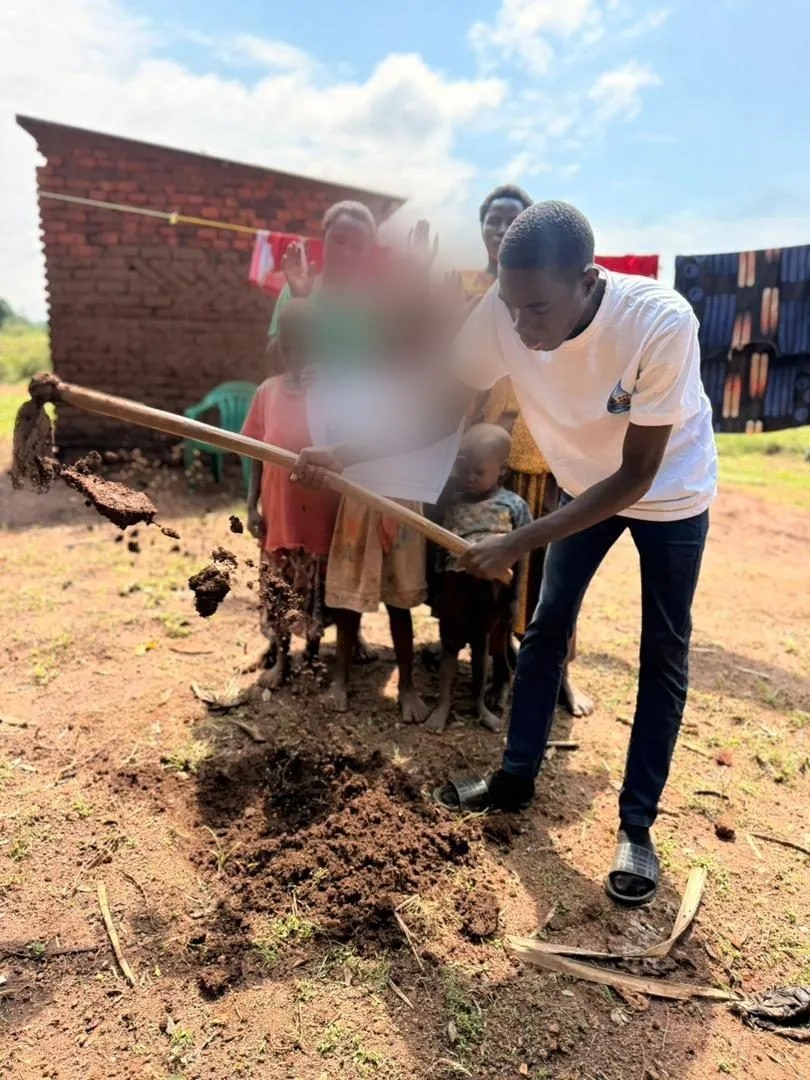
How much does a water well cost? With Blue & Green Hope, a family hand-pump water well in Uganda costs £560. That price covers siting, digging, lining, sealing, the pump, a laboratory water test at handover and full documentation, with every pound itemised on our transparency page before you pay.
A single number is only useful if you know what sits behind it. Appeals for wells range widely in price, and the cheapest offer is not always the best value, nor is the most expensive always the most thorough.
This article breaks the £560 into its parts, explains what makes a well cost more or less, and shows what you receive for the money. It is written for donors who want to understand the price before they decide.
What does the water well donation cost include?
The £560 is not a round figure chosen for marketing. It is the sum of the work needed to give one family a sealed, tested well with a working hand pump. Broadly, the money goes to the following:
- Siting: choosing a spot near the home and away from latrines and runoff.
- Labour for digging the shaft down to water.
- Materials for lining the shaft and casting the concrete apron that seals the top.
- The hand pump and its fitting.
- A laboratory water test before handover.
- Photos, video, GPS recording and the handover report.
- The plaque with the name you choose, up to 30 characters.
- Our operations, shown as a plain rate rather than hidden in other lines.
Every line, with its amount, is published on the transparency page. If a figure changes, the page changes with it.
Why does depth change the cost of a hand pump well?
Depth is the largest single factor in the cost of a hand pump well. Where we work, much of the ground is hard, and water is often 50 to 80 metres down. Every extra metre means more digging time, more lining material and more care to keep the shaft safe.
Shallow wells in soft ground can be built for much less, which is one reason prices differ so much between appeals. A low price may simply reflect a shallow site. It may also reflect a well that reaches only the upper water, which can dry out or become contaminated more easily.
When you compare prices, ask how deep the well goes and what kind of ground it is dug in. A price without a depth tells you very little. Our pillar guide to water well donation covers the other questions worth asking before you give.
Why is the water test part of the price?
A well that gives water is not the same as a well that gives safe water. The laboratory test at handover checks the water at the source before the well is presented to the family. It costs money, takes time and requires a sample to travel to a lab, which is why some low-cost offers leave it out.
We include it because it is the only honest way to say the well is finished. The result appears in your handover report. If a site fails, the team does not present that well as complete.
This is also why we do not quote a lower price for an untested well. One price, one standard, for every family.
How much does a water well cost in other currencies?
Our prices are set in pounds sterling. If you visit from Canada, Australia, the United States or elsewhere, the price is shown in your own currency on the site. We do not convert figures in articles, because exchange rates move and a written conversion soon goes out of date.
For readers in North America, we have a separate guide on what a water well costs in dollars, which explains how the price appears at checkout and what stays the same whatever currency you use.
The work itself does not change with your currency. The same family well, the same test and the same documentation apply.
Is a water well in Africa cheaper than in Asia?
Not necessarily. Prices in both regions vary with depth, geology, local labour, the type of pump and how much documentation is included. A shallow well in soft soil can be inexpensive anywhere, while a deep well in hard rock will cost more in any country.
Comparing regions only makes sense when you compare like with like: the same depth, the same kind of well and the same proof. Our neutral comparison of water well costs in Africa and Asia sets out those variables without naming any organisation.
We work in Uganda, in East Africa. The price reflects the ground there and the standard we hold every well to.
What proof do you get for £560?
Part of what you pay for is certainty. For every well, you receive photos and video of the stages, the exact GPS location, a handover report with the water test result, and a photo of the plaque bearing the name you chose. Everything arrives by email as a permanent gallery link.
The GPS location means you are not asked to take our word for it. You can open the coordinates yourself, and our guide on how to check your well on a satellite map shows you how to do it step by step.
From payment to handover report, the lead time is 3 to 5 weeks. You will know where your money went, what it built and where it stands.
Is a family well cheaper than a village well?
A family well serves one household and its close neighbours. A village well is larger, shared by many households and usually costs more to build, because it needs a wider shaft, a heavier pump or a motor, and more work around the site.
The cost per person can look lower for a village well, since more people share it. The trade-off is ownership. When a pump belongs to everyone, it can be unclear who looks after it. A family well has a clear owner, a family that lives beside it and depends on it every day.
We build family wells for that reason. The price of £560 reflects one well, for one family, with one name on the plaque and one complete record of the work. You can read more in our guide to the difference between a family well and a village well.
Can you spread the cost of a well?
Yes. If a single payment of £560 does not suit you, a monthly gift can fund wells over time. The Spring, at £47 a month, funds about one well a year. The Orchard, at £95 a month, funds about two. You can change or stop at any time with one email.
You can also pool money with family or friends and pay once together. The plaque carries one name, so agree on it before you pay. Everyone can share the same gallery link afterwards.
Questions people ask
Is the £560 a minimum, or can I pay more?
It is the full price of one family hand-pump well. You pay that amount for one well, and the itemised breakdown shows where it goes. If you want to do more, you can fund several wells or add fruit trees through a pack, paid in one go under one name.
Does the price change if the well has to be deeper?
No. The price you pay is fixed at £560 for a family well, whatever the final depth. The itemised figures on the transparency page reflect the typical work for the hard ground where we build, where water is often 50 to 80 metres down.
Why do some appeals offer wells for much less?
Lower prices often reflect shallower sites, a different type of well, no laboratory test or less documentation. Some are perfectly honest for the work they describe. The key is to ask what depth, what pump, what test and what proof are included, and compare like with like.
Is any part of the price spent on running costs?
Yes, and we say so. Our operations rate is stated plainly on the transparency page alongside the other lines. We do not claim that every penny goes to the field, because no organisation can build and document a well without some running costs.
Can I claim any tax back on the cost of a well?
No. Blue & Green Hope is a UK company, not a charity. Your payment is not eligible for any tax scheme, and we prefer to state that clearly before you give rather than after.
The short version
A family hand-pump well in Uganda costs £560, tested and fully documented, with every pound shown in public. If that is the kind of giving you are looking for, you can see the stages and the breakdown on our family water well page and decide in your own time.
Keep reading
Water Well Donation: The Complete Guide for Donors
A water well donation funds a family hand-pump well in Uganda for £560. What it costs, how it is built, what proof you receive and how to choose well.
Why Water Well Prices Differ: What You Are Paying For
Why water well prices differ so much between appeals: depth, ground, well type, testing and proof. How to compare a cheap and an expensive water well.
Water Well Cost in Dollars: A Guide for US and Canada
Water well cost in dollars: our family well is priced at £560 and shown in your own currency on the site. What it covers and what US donors receive.