Journal
Water Well Donation: The Complete Guide for Donors
A water well donation funds a family hand-pump well in Uganda for £560. What it costs, how it is built, what proof you receive and how to choose well.
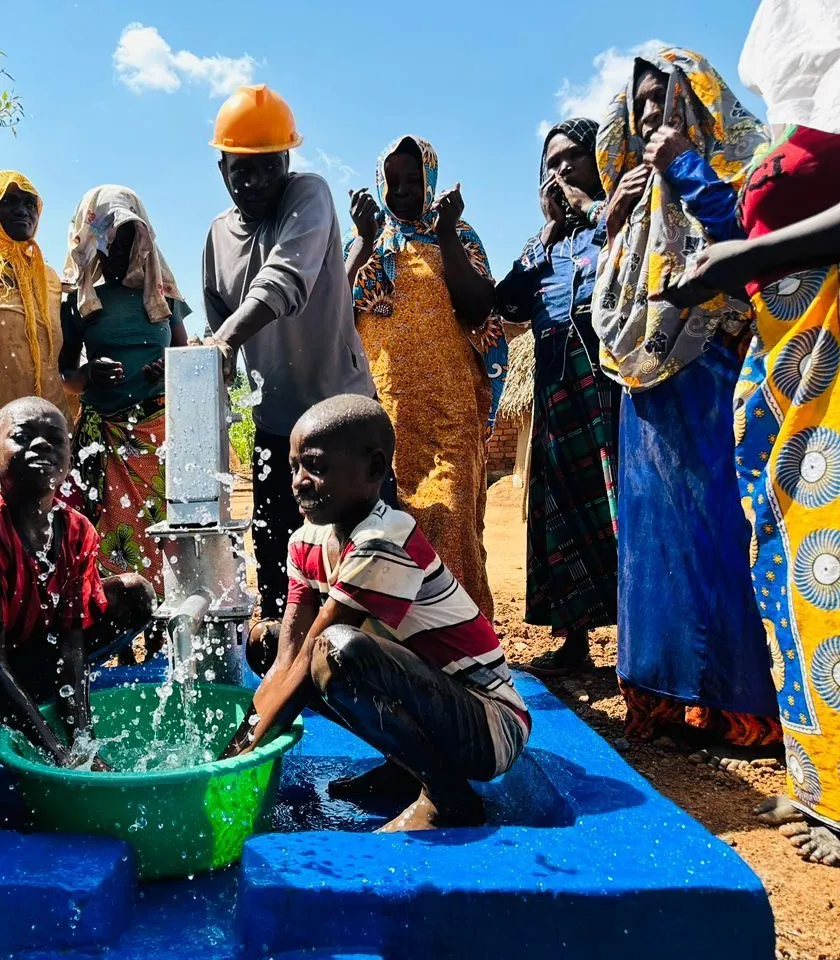
A water well donation pays for a well to be dug, sealed and fitted with a hand pump for a family that has no safe water nearby. With Blue & Green Hope, a family hand-pump well in Uganda costs £560, takes 3 to 5 weeks, and you receive photos, video, GPS location and a handover report.
This guide brings together everything a careful donor asks before giving. It explains what the money covers, how the well is built, how the water is checked, what kind of well you are actually paying for and how to tell a documented project from a vague promise.
What is a water well donation?
A water well donation is a gift that pays for one specific well, from siting to the day the pump is handed over. It is different from a general appeal, where your money joins a pool and you never learn what it built. Here the well is a single, named project with its own location, its own photos and its own report.
The well we build is a family hand-pump well. It serves one household and its close neighbours, rather than a whole village, which keeps responsibility for the pump clear. If you want to understand the choice between scales, our guide on family wells compared with village wells sets out the trade-offs plainly.
Many Muslim donors give a well as continuing charity, a deed whose benefit carries on after the giving. Others simply want a practical, visible gift. Both are welcome, and the process is the same.
How much does it cost to donate a water well?
A family hand-pump well in Uganda costs £560. That figure covers siting, digging, lining, sealing, the pump, the laboratory water test, documentation and the handover. Every pound is broken down on the transparency page, so you can see where each part goes before you pay.
Prices are shown in your own currency on the site if you are outside the UK. For a full breakdown, read how much a water well costs and why. Readers in North America can also see what a water well costs in dollars, with the same itemised logic.
You will find wells advertised for far less, and some for far more. Our guide to why water well prices differ so much explains depth, ground, pump type and documentation, and a second piece compares the cost of a water well in Africa and Asia.
What kind of well are you funding?
We build hand-dug, hand-pump wells. We do not drill boreholes and we do not use drilling rigs. A hand pump has few moving parts and a family can operate it without fuel or electricity, which suits the places we work.
Wells come in several forms, and the names are often used loosely in appeals. Before you compare offers, it helps to know what each term means:
- A hand-dug well with a hand pump, the type we build, explained in our comparison of hand pump wells and boreholes.
- A tube well, a narrow pipe driven into shallow ground, compared in tube wells, hand-dug wells and community wells side by side.
- A community well, larger and shared by many households, with a different model of ownership.
How is a hand-dug well built, step by step?
The work follows a fixed order. Each stage is photographed so you can follow it in your gallery.
Siting and digging
The team chooses a site close to the family home and away from latrines and runoff. The shaft is then dug down to water, which in hard ground is often 50 to 80 metres below the surface.
Lining, sealing and the pump
The shaft is lined, the top is sealed with a concrete apron to keep surface water out, and the hand pump is fitted. Our detailed guide on how a hand-dug well is built walks through every stage with photos.
Testing and handover
A water sample goes to a laboratory before the handover. Only then is the well presented to the family and the report sent to you.
How do you know the water is safe to drink?
A new well is only useful if the water is safe. That is why every well we fund has a laboratory water test at handover. The result is part of the handover report, not a promise made in advance.
The test looks at what matters for drinking water at the source. Our guide to water testing for a new well explains what is measured and how to read the result in your report.
Wider questions about water in the country are covered in our overview of clean water in Uganda, which explains why we started there and what families face without a nearby source.
People also ask how long a well keeps working. The honest answer depends on the ground, the build and how the pump is used. Our article on how long a water well lasts sets out the factors without inventing a figure.
What proof do you receive for your donation?
Proof is the heart of a documented gift. For each well you receive photos and video of the stages, the exact GPS location, a handover report and a photo of the plaque with the name you chose, up to 30 characters. Everything arrives by email as a permanent gallery link you can return to and share.
The lead time is 3 to 5 weeks from payment to the handover report. If you want to see what a complete file looks like, read our guide to a documented water well gift. It shows what each item proves and what it does not.
Can you give a water well as a gift or in someone's name?
Yes. The plaque can carry any name up to 30 characters: your own, a parent, a child, a couple, or someone who has passed away. Many donors fund a well in memory of a relative, following the hadith in which the Prophet ﷺ was asked whether a son could give charity on behalf of his late mother, and he said yes (Sahih al-Bukhari, no. 1388).
When a person dies, their deeds come to an end except three: a continuing charity, knowledge that benefits, or a righteous child who prays for them.Sahih Muslim, no. 1631
For weddings, births or Eid, our guide on how to gift a water well explains how the name and the gallery link work when the well is for someone else. The reward belongs to Allah; what we can promise is a real well and a complete record of it.
Guides in this series
Each guide below answers one question in depth. Read them in any order.
- Why we work in East Africa: donating a water well in Africa.
- The full price explained: the cost of a family hand pump well.
- For US and Canadian readers: well prices in US dollars.
- Comparing offers: cheap and expensive wells compared.
- Regions compared: well costs across Africa and Asia.
- Method: the difference between a well and a borehole.
- Types: the main types of water wells.
- Construction: the steps to build a well.
- Safety: laboratory testing of well water.
- Scale: choosing between a family or a village well.
- Lifespan: what decides how long a well lasts.
- Proof: what a fully documented well looks like.
- Gifting: a well given in someone's name.
- Context: the water situation in Uganda.
Questions people ask
Is a water well donation eligible for any tax scheme?
No. Blue & Green Hope is a UK company, not a charity, so your payment is not eligible for any tax scheme and we do not issue receipts for tax purposes. We say this plainly so that you can decide with the full picture. What you do receive is a fully itemised price and complete documentation of your well.
Can I choose the country or the exact village?
Our wells are currently built in Uganda, in East Africa. The team chooses the exact site based on the ground, the distance to the family home and the distance from latrines. You see the result through the GPS location in your report, so you know exactly where your well stands.
Can several people fund one well together?
Yes. A family, a group of friends or a mosque circle can pool money and pay once. The plaque carries one name of up to 30 characters, so it helps to agree on it beforehand. The gallery link can be shared with everyone who contributed.
Can I fund a well with a monthly gift instead of one payment?
Yes. The Spring, at £47 a month, funds about one well a year, and The Orchard, at £95 a month, about two. You can change or stop a monthly gift at any time with one email. Details are on the monthly giving page.
What happens if the team cannot reach water at the first site?
The well is not presented as finished until it gives water and passes the laboratory test. If a site does not work, the team moves to another suitable spot nearby. Your handover report shows the final location by GPS, so the well you see is the well that was built.
Where to start
If you have read this far, you already know more than most donors ask. The next step is simple: look at the itemised price and the stages on our family water well page, choose the name for the plaque, and take your time. When you are ready, the well will be there to build, and you will see every stage of it.
Keep reading
Why Water Well Prices Differ: What You Are Paying For
Why water well prices differ so much between appeals: depth, ground, well type, testing and proof. How to compare a cheap and an expensive water well.
Water Well Cost in Dollars: A Guide for US and Canada
Water well cost in dollars: our family well is priced at £560 and shown in your own currency on the site. What it covers and what US donors receive.
How Much Does a Water Well Cost? A £560 Price Explained
How much does a water well cost? A family hand-pump well in Uganda costs £560. See what each part pays for, why depth matters and what proof you receive.