Journal
Water Well Donation Proof: The Complete Guide for Donors
Water well donation proof explained: the photos, video, GPS location and handover report you should receive, and how to check each one yourself.
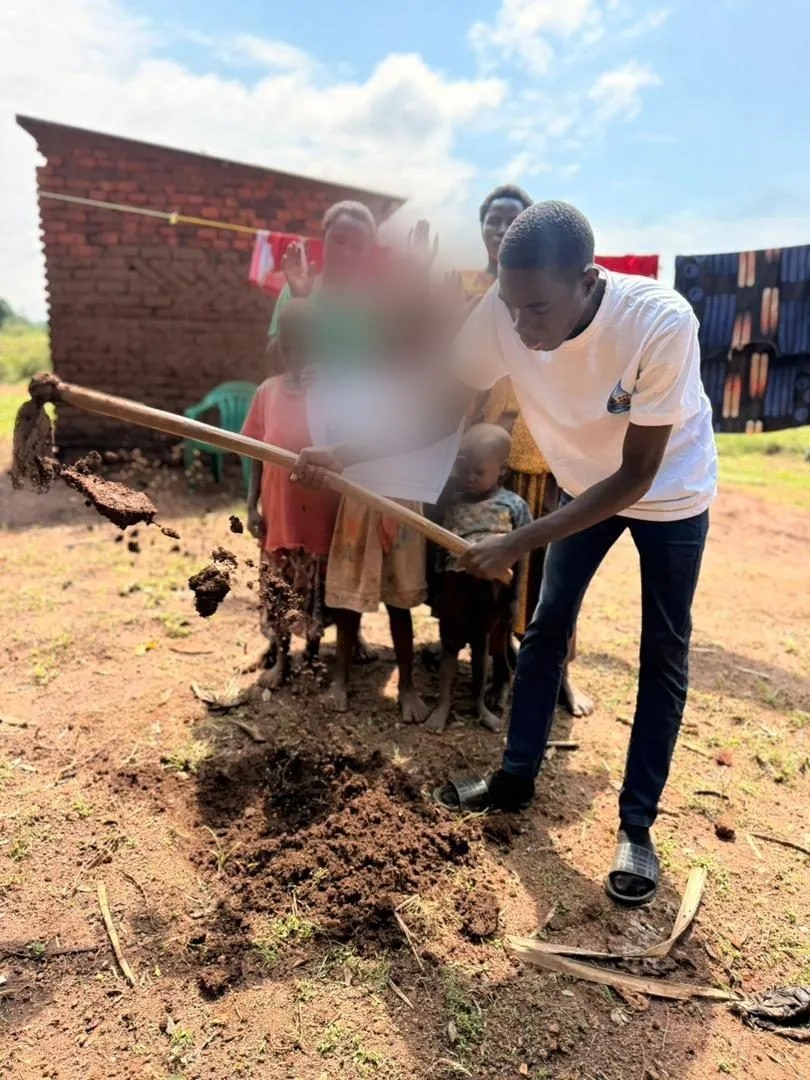
Water well donation proof is the set of evidence that shows your well exists, where it is and that it works. For a family hand-pump well in Uganda, good proof means dated photos and video of each stage, an exact GPS location, a lab water test at handover, a handover report and the name on the plaque.
Many donors give for a well and then hear very little. A certificate with a generic picture arrives, and the doubt begins. That doubt is understandable, and it is the reason this guide exists.
Below you will find what real proof looks like, how to check each piece yourself, how long it takes to arrive, and the warning signs that should make you pause. Each section links to a deeper guide in this series, so you can go as far as you need.
What counts as proof of a water well?
Proof of a water well is evidence tied to one specific site. A photo of a smiling crowd beside a pump proves that some well exists somewhere. It does not prove that your gift built it. The difference lies in details that only your well can carry.
The strongest proof combines several pieces that confirm each other. The plaque shows the name you chose. The GPS point places the well on a map. The stage photos show the same site from the first dig to the finished apron. The water test shows the water is fit to drink at handover. Together, they are hard to fake and easy to check.
- Photos of the main stages: siting, digging, lining, the apron and the pump.
- Video of the finished well, ideally with the pump being used.
- The exact GPS location, so you can find the site on a map.
- The name on the plaque, up to 30 characters, visible in the photos.
- A lab water test and a handover report that ties it all together.
If you want a method for checking any project, not only ours, read our guide on how to verify a water well project step by step.
How do I know my well was actually built?
You know your well was built when the pieces of evidence agree with each other. The plaque in the photo carries your name. The landscape in the stage photos matches across the weeks. The GPS point lands in a real place where homes or fields are visible from above.
The quickest test is the map. Paste the coordinates into a free satellite map and look at the surroundings. Our guide to checking your well on a satellite map shows you how, including why the imagery may be older than the well itself.
It also helps to understand what a coordinate can and cannot prove. A GPS point tells you where, not what. Our explainer on GPS proof and its limits covers the difference between a geotagged photo and a coordinate written into a report.
Finally, look at the media closely. Consistent light, the same team, the same trees in the background: these small details are what make photo and video proof of a donation convincing rather than decorative.
What does a handover report include?
The handover report is the final document for your well. It gathers the evidence in one place and marks the moment the well is handed to the family who will use it. For a Blue & Green Hope well, it is sent by email with a permanent gallery link that holds the photos and video.
A good report names the site, gives the GPS coordinates, shows the plaque and records the result of the lab water test taken at handover. It should read like an engineering record, not a thank-you card.
We go through every part in our guide to what a handover report contains, so you know what to look for and what a missing section might mean. Our full method is also described on the how we verify page.
How long does it take to receive proof?
For a family hand-pump well in Uganda, Blue & Green Hope sends the handover report 3 to 5 weeks after payment. The range depends on the ground and the season. Hard ground in parts of East Africa means water is often 50 to 80 metres down, and reaching it takes time.
During that period, the work moves through siting, digging, lining, the apron, the pump and the water test. Each stage is photographed, and the full set reaches you together with the report.
Our guide on how long it takes to receive proof walks through each stage and explains what can cause a short delay. A delay with a clear reason is normal. Silence with no reason is not.
What are the red flags when donating for a well?
Most providers are honest. A few are vague, and vagueness is the main warning sign.
- No clear list of the proof you will get before you pay.
- Photos that look the same for every donor, with no name visible.
- No GPS location, or a location that only names a region.
- A price with no breakdown of where the money goes.
- Pressure to give today, countdowns or guilt-led messages.
Our guide to red flags when donating a water well covers each sign in detail. Before you commit, it also helps to have a short list of questions to ask before funding a well, so you can compare answers side by side.
How do I choose a water well provider in the UK?
Choose the provider that tells you the most before you pay. Look for a clear price, a public breakdown of costs, a description of the type of well, a stated lead time and a written list of the proof you will receive. These are signs of an organisation that expects to be checked.
Price matters, but it only means something next to what is included. Our guide on how to choose a water well provider in the UK sets out the criteria, and our look at cheap water wells and what you get explains why the lowest price is not always the best value.
It is also fair to ask about legal status. Blue & Green Hope is a UK company, not a charity, and says so plainly. Our article on choosing a company or a charity for Sadaqah explains what that difference means for you as a donor.
Where does the money for a well go?
A family hand-pump well in Uganda costs £560 with Blue & Green Hope. Every pound is itemised on our transparency page, including our operating costs, stated plainly. If you live outside the UK, the price is shown in your own currency on the site.
An itemised price is a form of proof in itself. It lets you compare providers on substance rather than on a headline figure. Our guide to where your donation goes breaks the figure down line by line.
The site matters as much as the budget. A well placed in the wrong spot may find little water. Our article on how well sites are chosen explains how the field team decides where to dig, and why that decision shapes everything after it.
Can I visit my water well?
Some donors would like to see their well in person. It is a natural wish, and the GPS location makes it possible in principle. In practice, a visit needs planning, local guidance and respect for the family who now uses the well every day.
For most donors, the photos, the video and the coordinates are the visit. If you are thinking of going, our guide on whether you can visit your water well covers what to consider first.
Many donors give a well as a continuing charity.
When a person dies, their deeds come to an end except three: a continuing charity, knowledge that benefits, or a righteous child who prays for them.Sahih Muslim, no. 1631
Questions people ask
Is a certificate enough proof for a water well donation?
A certificate is a nice keepsake, but on its own it proves very little. It is usually the same design for every donor. Ask for evidence tied to one site: stage photos, video, a GPS location, the plaque with your chosen name and a handover report with a water test result.
Can I put a loved one's name on the well?
Yes. The plaque carries a name of your choice, up to 30 characters. Many donors choose the name of a parent, a grandparent or a family. The plaque appears in the photos and in the handover report, so you can see the name in place.
Do I need an account to see my proof?
No. The handover report, photos and video are sent by email with a permanent gallery link. You can open it on any device, keep it and share it with your family whenever you wish.
Why is the water tested at handover?
A well should give water that is fit to drink, not only water. A lab test at handover checks the water before the family starts using it, and the result is recorded in the handover report so you can read it yourself.
The short version
Good water well donation proof is specific, consistent and checkable: stage photos, video, a GPS point, the plaque, a water test and a handover report. Ask for it before you pay, check it when it arrives, and trust the provider who welcomes your questions. When you are ready, you can read how a family hand-pump well is built and funded, at your own pace.
Keep reading
Check Water Well on Map: Find Your Well From Its GPS Point
Check water well on map in minutes: paste the GPS location from your report into a free satellite map, read the surroundings and know what to expect.
How to Verify a Water Well Donation: A 6-Step Method
How to verify a water well donation in six steps: check the plaque, the GPS point, the stage photos, the water test and the price before you give.
Best Times to Give Sadaqah: A Year-Round Islamic Calendar
The best times to give sadaqah across the Islamic year, from Ramadan 2027 to Dhul Hijjah and family milestones, with a calm plan for sadaqah jariyah.