Journal
Best Sadaqah Jariyah: How to Compare the Main Forms
Which is the best sadaqah jariyah? A calm comparison of water, trees, knowledge and mosques, by daily benefit, cost and proof you can actually check.
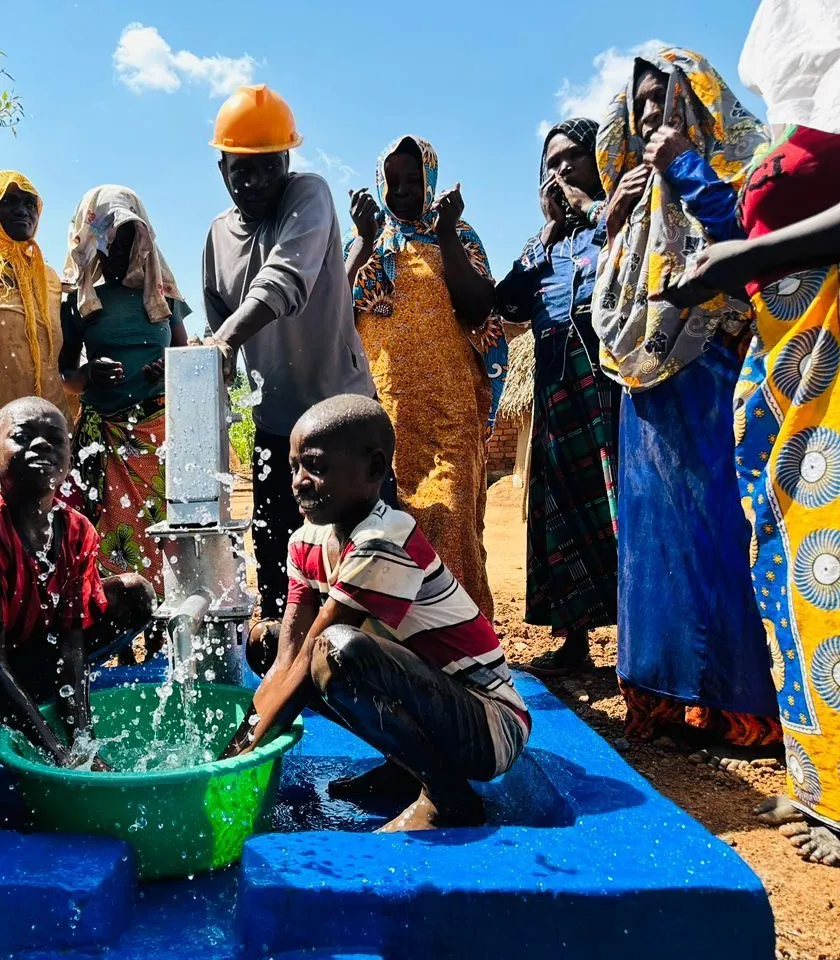
There is no single best sadaqah jariyah for everyone: the reward is with Allah, and authentic hadith praise several forms. In practical terms, the strongest choices are gifts used every day for years, such as a family water well or fruit trees, that you can verify with photos, a location and a report.
People ask which sadaqah jariyah is best because they want their gift to count. That is a good instinct. But the honest answer is a set of questions rather than a ranking: how many people use it, how often, for how long, and can you see that it exists?
This article compares the main forms side by side, explains what the hadith say and do not say, and suggests how to choose. For the basics, start with our guide to what sadaqah jariyah means.
Which sadaqah jariyah is best according to the hadith?
The foundation is the hadith in Sahih Muslim, no. 1631, which names continuing charity, beneficial knowledge and a righteous child as three deeds that go on after death. A further narration, reported by al-Bazzar and authenticated by al-Albani in Sahih al-Targhib, no. 73, lists seven deeds whose reward reaches a person in the grave.
Seven deeds whose reward reaches a person in the grave: teaching knowledge, digging a river, digging a well, planting a palm tree, building a mosque, leaving a Qur'an, leaving a child who asks forgiveness for them.Al-Bazzar, authenticated by al-Albani, Sahih al-Targhib no. 73
The list does not place these in order of merit. It tells us that all seven are lasting good. So when people speak of the most rewarding sadaqah jariyah, they are making a practical judgement, not quoting a ranking. Only Allah knows the reward of any deed, and it is wise to be wary of anyone who claims otherwise.
The main forms compared
Here is a plain comparison of the forms most people consider:
- Water well: used daily by the same families from the first morning. Clear proof is possible: photos, GPS location, a lab water test and a handover report.
- Fruit trees: feed a named family and give an income from the harvest once the tree bears fruit. Low entry price, proof by planting photos and a named sign.
- Knowledge: funding teaching or books can benefit many people, but the result is harder to see and measure.
- Mosque: a shared place of worship and learning. Usually a large project funded by many donors together.
- A copy of the Qur'an: simple and personal, often given in the name of someone who has died.
Each of these is a valid continuing charity. The differences are in cost, in how directly you can see the benefit, and in how personal the gift feels to you. Our longer list of sadaqah jariyah ideas covers smaller and shared options as well.
It also helps to be honest about what you can follow through. A gift you understand, can afford and can check is easier to give with a calm heart than a larger promise you are unsure about.
Why water is often called the most rewarding sadaqah jariyah
Water comes up first for many families, and the reasons are practical. Everyone needs it, every day. A well near the home saves long walks to a distant source, and it is used from the day it is handed over. Two of the seven deeds in the narration, digging a river and digging a well, are about water.
In Uganda, where we fund family hand-pump wells, the ground is often hard and water is often 50 to 80 metres down. A well costs £560, shown in your own currency on the site, and every pound is itemised on the water well page. The water is tested in a lab at handover.
You receive photos and video of the stages, the exact GPS location, a handover report and your chosen name on the plaque, up to 30 characters, by email as a permanent gallery link. It usually takes 3 to 5 weeks from payment to the handover report.
When fruit trees are the better choice
Trees suit people who want a lower starting price, or who like the idea of food and income for one named family. The Prophet ﷺ said that no Muslim plants a tree or sows a crop from which a bird, a person or an animal eats, except that it is counted as charity for him. This is in Sahih al-Bukhari, no. 2320.
Prices range from £39 for a banana, guava or papaya tree, through £46 for a mango, lemon or orange, and £65 for an avocado or jackfruit, to £109 for a date palm. Two trees are 10% off and three or more are 20% off. You receive photos of the planting, the sign with the name and the GPS location.
A date palm is a natural choice for many, since planting a palm tree is one of the seven deeds named in the narration. Some families combine both forms in one pack: a well with fruit trees, one payment and one name.
Choosing the best sadaqah jariyah for a parent
Many people looking for the best sadaqah jariyah are giving for someone they have lost. A man once asked the Prophet ﷺ whether he could give charity for his mother, who had died suddenly, and he was told yes. The narration is in Sahih al-Bukhari, no. 1388.
When giving for a parent, think about what they cared about. A father who loved his garden might be remembered with a date palm or a small orchard. A mother who always made sure guests had water might be remembered with a well. Our guide to sadaqah jariyah for a deceased father has ideas for plaque and sign wording.
There is no wrong choice here. The gift that feels right to you, given sincerely, is a fitting one.
A practical test before you give
Whatever form you choose, a few questions help you judge a continuing charity:
- Will people use it every day, or only now and then?
- Is the price itemised, so you know where each pound goes?
- Will you receive photos, a location and a report, not just a receipt?
- Is the work done by people who know the local ground and conditions?
- Can you afford it without strain, or would a monthly gift suit you better?
If a lump sum is not right for you now, a regular gift can build towards one. The Spring, at £47 a month, funds about one well a year. Our guide to monthly sadaqah jariyah explains how it works. The field teams we work with have helped more than 30,000 families, and each project is documented in the same way.
Questions people ask
Is a water well better than a mosque as sadaqah jariyah?
Both are named in the narration of seven deeds, and no authentic text ranks one above the other for everyone. A family well is usually affordable for one donor and gives daily, visible benefit. A mosque is often funded by many people together. Choose the one you can give sincerely and see through.
Is it better to give one large gift or many small ones?
Either can be a continuing charity. A single well gives one clear, documented result. Several trees spread across families give smaller results in more places. Some people do both over time, starting with trees and saving towards a well, or giving monthly.
Does a bigger gift mean a bigger reward?
Nobody can promise that. The reward is with Allah, who knows the intention and the circumstances of every giver. A small gift given sincerely by someone with little may weigh more than a large one. Give what you can, without strain, and leave the reward to Allah.
Can I name the gift after someone?
Yes. For a well, the name goes on the plaque, up to 30 characters. For a tree, it goes on the sign beside it. Many people use the name of a parent, a grandparent or a child, sometimes with a short line such as a prayer for mercy.
What if I cannot decide between water and trees?
Many families choose a pack: a well with fruit trees, paid in one payment under one name. Others start with one tree now and add a well later. There is no deadline. Choose what you can give sincerely today, and remember that a smaller lasting gift is still a continuing charity.
Where to start
The best sadaqah jariyah is the one you give sincerely, that people keep using, and that you can see is real. For most families that means a well or fruit trees with clear proof. Take your time, set your intention, and choose the gift that feels right for you and the person you have in mind.
Keep reading
What Is Sadaqah Jariyah? Meaning, Hadith and Examples
What is sadaqah jariyah? Its meaning, the hadith behind it, clear examples of continuing charity in Islam, and how to choose one you can see.
Sadaqah Jariyah Hadith: The Authentic Narrations Explained
The sadaqah jariyah hadith in Sahih Muslim and related narrations, with exact references and what they teach about deeds that continue after death.
Best Times to Give Sadaqah: A Year-Round Islamic Calendar
The best times to give sadaqah across the Islamic year, from Ramadan 2027 to Dhul Hijjah and family milestones, with a calm plan for sadaqah jariyah.